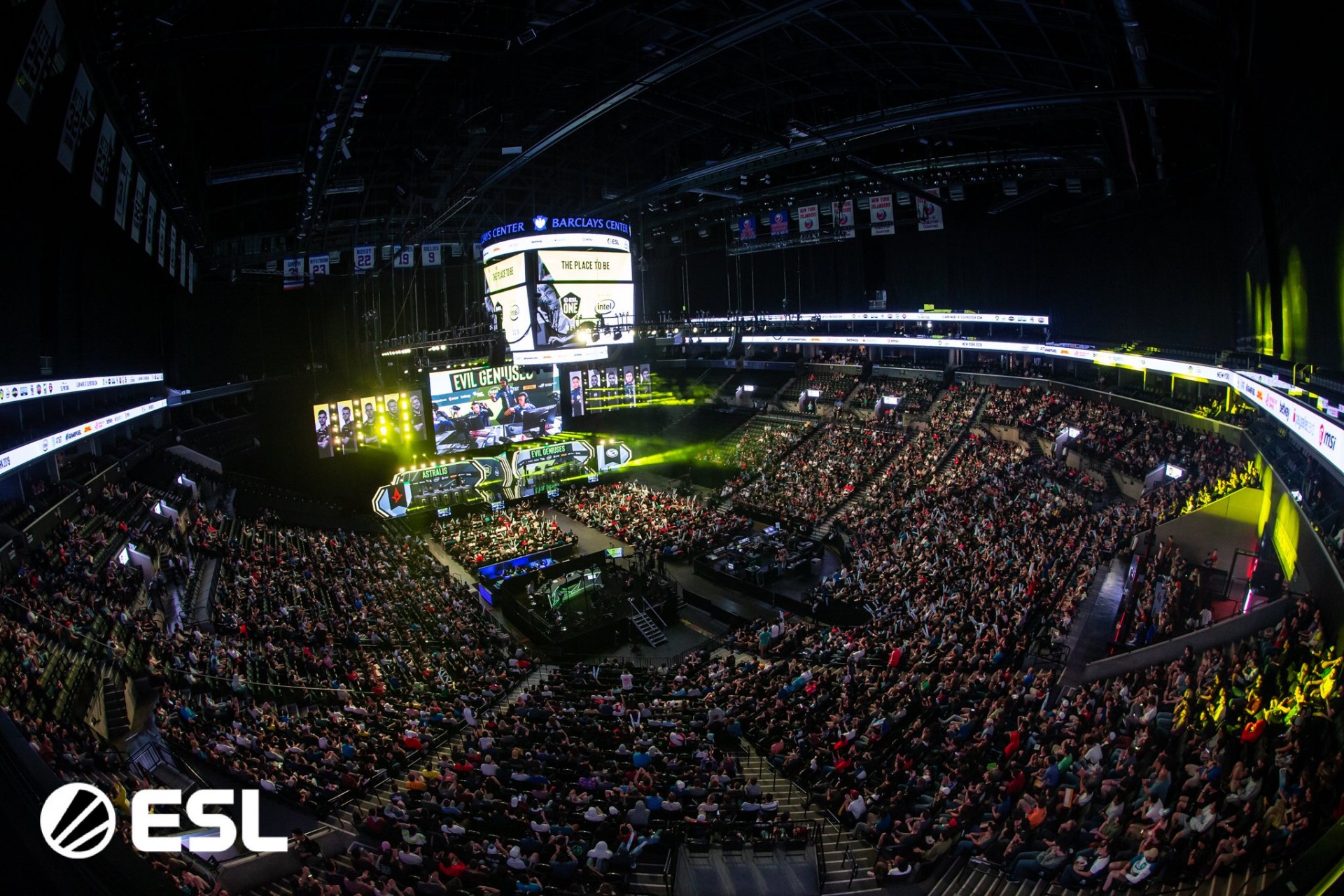
There’s a universal belief, from gamer fans to Wall Street analysts, that Esports is going to be massive. This becomes acutely self-evident during the Corona lockdown as inevitably we play more video games. Recently, I’ve seen an incredible resurgence of League of Legends within my friend group.
Despite the growing cultural awareness of Esports, I didn’t really feel the wave until I went to my first Esports tournament. This was a CS:GO tournament that had filled more than a third of the seats at the Barclays Center. I was blown away by both the energy and youthful passion of the fans (one gentleman started stacking empty popcorn buckets on his head, inadvertently becoming “BucketHead” and becoming the mascot of the tournament). The atmosphere was contagious and the fond nostalgia inevitable. At it’s core, the game hasn’t changed much since its original release more than 20 years ago. Watching the professional players onstage transported me to middle-school when we’d surreptitiously play on school computers. There’s a certain pleasure in seeing the game live on in a younger crowd and reliving your miscreant youth. Provided a supportive environment, those young fans will be a captive audience for the rest of their lives. I left that stadium a convert, another drop in the swelling Esports wave.
Every since that inspiration, I’ve looked for investment opportunities to ride the Esports wave. Unfortunately, if there exists an Esports money-making rocket ship, I’ve yet to find it. Direct investment opportunities are scarce and the esports ecosystem unstructured. If we can’t make a pure Esports bet, can we at least sell shovels? (e.g. esports ETFs, betting arbitrage, tournament management). These opportunities all feel too diffuse and only ancillary connected to the big wave. For example, the new NERD ETF holds a collection of game, hardware, streaming, and media holding tech companies. Not only do these companies sell shovels other than Esports, they share systemic tech exposure. In this way, Esports investment feels much more “internet of things/wearables/block chain rising tide” than it does “crypto money bags rocket ships.” Finding a pure form of this esports investment thesis requires a trackable growth metric (e.g. relative esports-to-basketball tournament revenue or measurable income of top players). The devil is in the details and such a financial derivative does not exist.
It’s easy to bet that a popular video game will grow. The monetization of that game’s growth is trickier and reliant on the surrounding ecosystem: tournaments, in-game currency, spin-off games, etc. Monetizing via speculative interest the monetization of growth – now that’s hard.
 Erick's Blog